
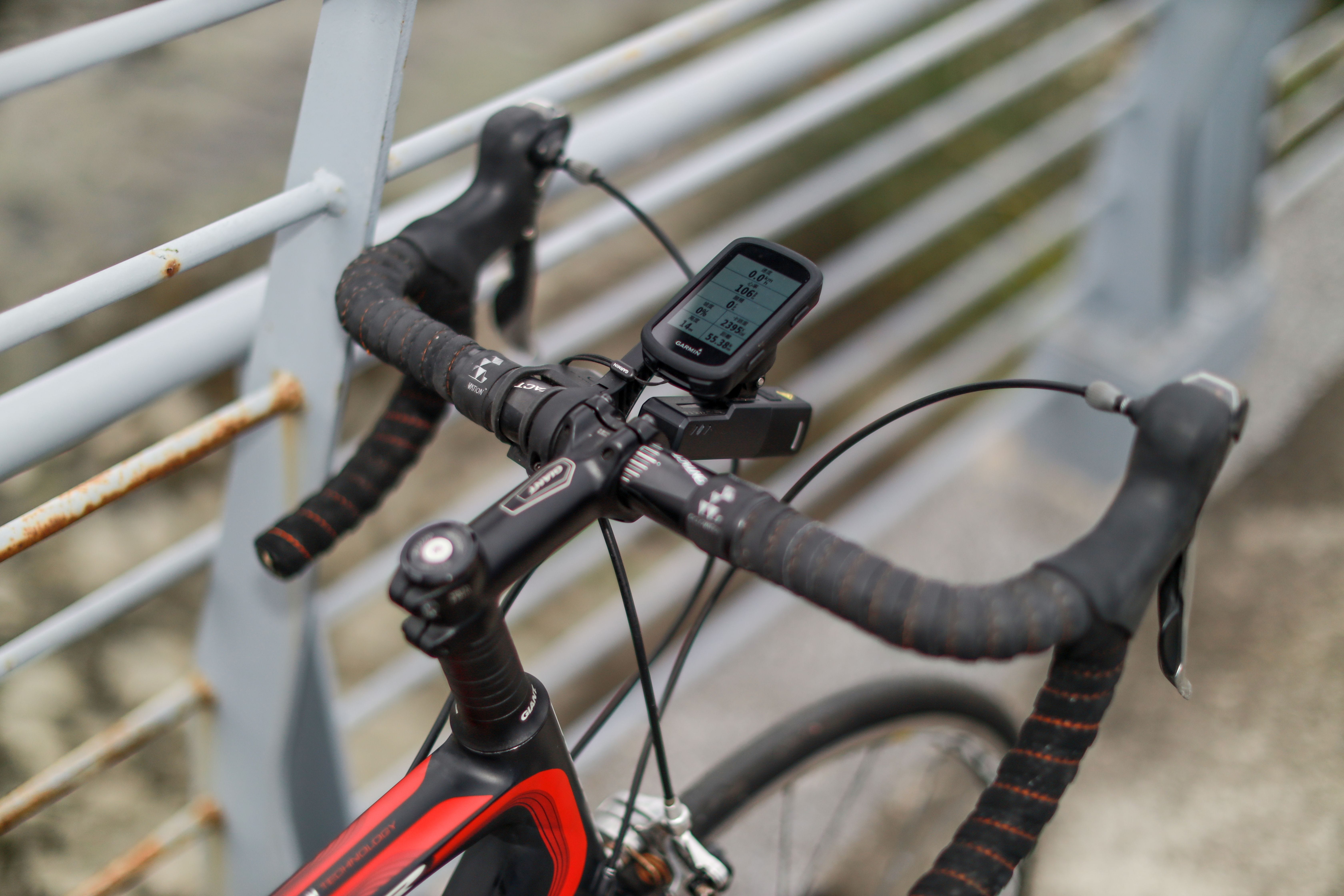
Let me tell you something that might surprise you coming from a data-obsessed cyclist: I recently took the power meter off my bike. On purpose. And it might be one of the best training decisions I've made.
Power meters have become a staple in competitive cycling — a gold standard for measuring effort, tracking fitness, and structuring training. But are they right for every rider? And what happens when you ditch the watts and listen to your body instead? That’s what this post is about.
Why power meters became the gold standard
A power meter measures the actual work your body is doing — in real time, in watts. Unlike heart rate, power output doesn’t lag. You push harder, the number goes up immediately. That objectivity is incredibly useful when you’re trying to pace a century ride or nail a structured training block.

These metrics, built on power data, give you a complete, objective picture of your training load over weeks and months — something heart rate alone can’t fully replicate.
The real tradeoffs
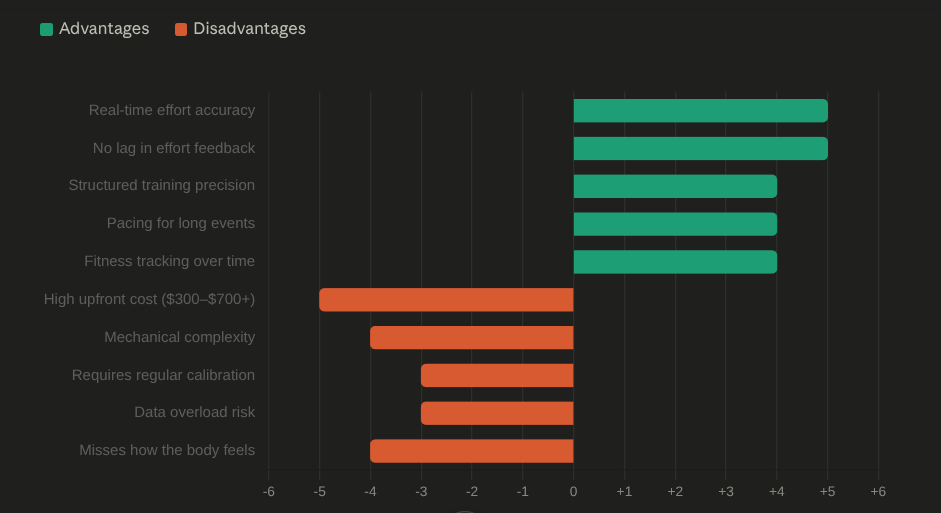
Power meter: advantages & disadvantages
Here’s an honest breakdown of what you gain — and give up — when you add a power meter to your setup.
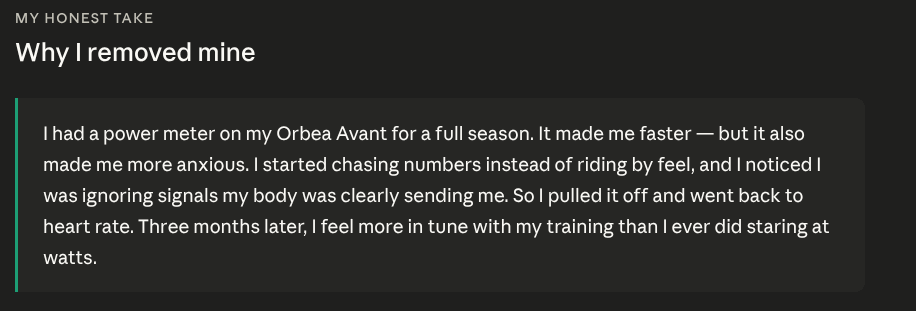
This isn't anti-data. It's about choosing the right data for where you are in your cycling journey. For beginners, returning riders, and endurance-focused athletes like me, heart rate is often the smarter — and more accessible — tool.
Train smarter, not just harder
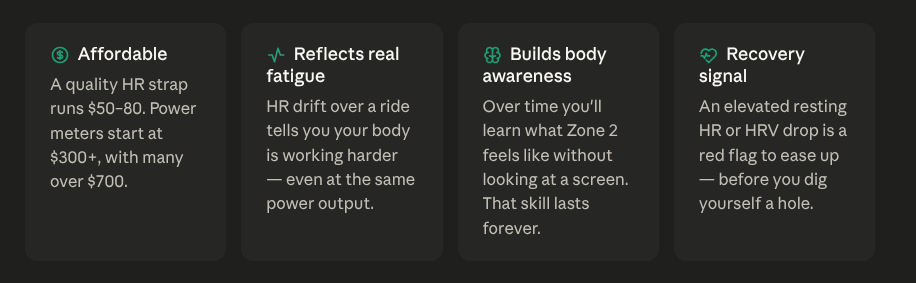
Heart rate monitoring: the advantages
Heart rate is a direct window into your body's internal state. It responds to fatigue, heat, stress, illness, and sleep deprivation — things a power meter is completely blind to. Here's why it might be all you need:
Training with heart rate: a practical guide
The key is knowing your zones. Most HR-based training systems use 5 zones anchored to your max heart rate (MHR). You can estimate MHR with 220 – your age, but a field test or all-out effort gives a more accurate number.
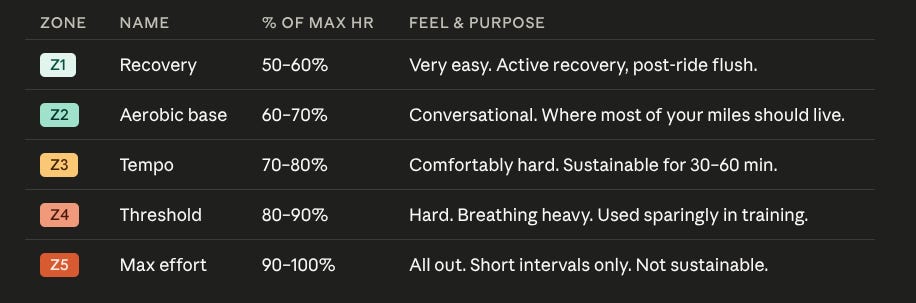
For endurance and century ride preparation, the goal is simple: spend 80% of your time in Z1–Z2, and the rest in Z3–Z4. This is the 80/20 rule, and it works.
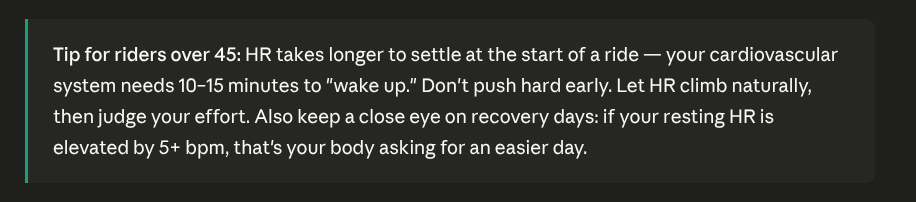
So, to watt or not to watt?
If you’re a competitive racer doing structured interval blocks, a power meter is probably worth the investment. But if you’re a beginner, a returning rider, or someone training for events like a century — heart rate monitoring is a seriously capable tool that costs a fraction of the price and teaches you to understand your body in ways watts never will.
I don’t miss my power meter. My legs still know when they’re tired.
Comment Submitted
Thanks! Your comment is awaiting moderation and will appear shortly.